Early Detection of Abdominal Aortic Aneurysms by Pulse Wave Analysis
Abdominal aortic aneurysms (AAA) are typically asymptomatic until rupture, which carries extremely high mortality. Therefore, early detection is critical to reducing AAA-related deaths. However, most AAAs are currently discovered incidentally through medical imaging. We are developing machine learning-based pulse wave analysis methods that are more accessible and cost-effective for large-scale screening compared to traditional imaging techniques.
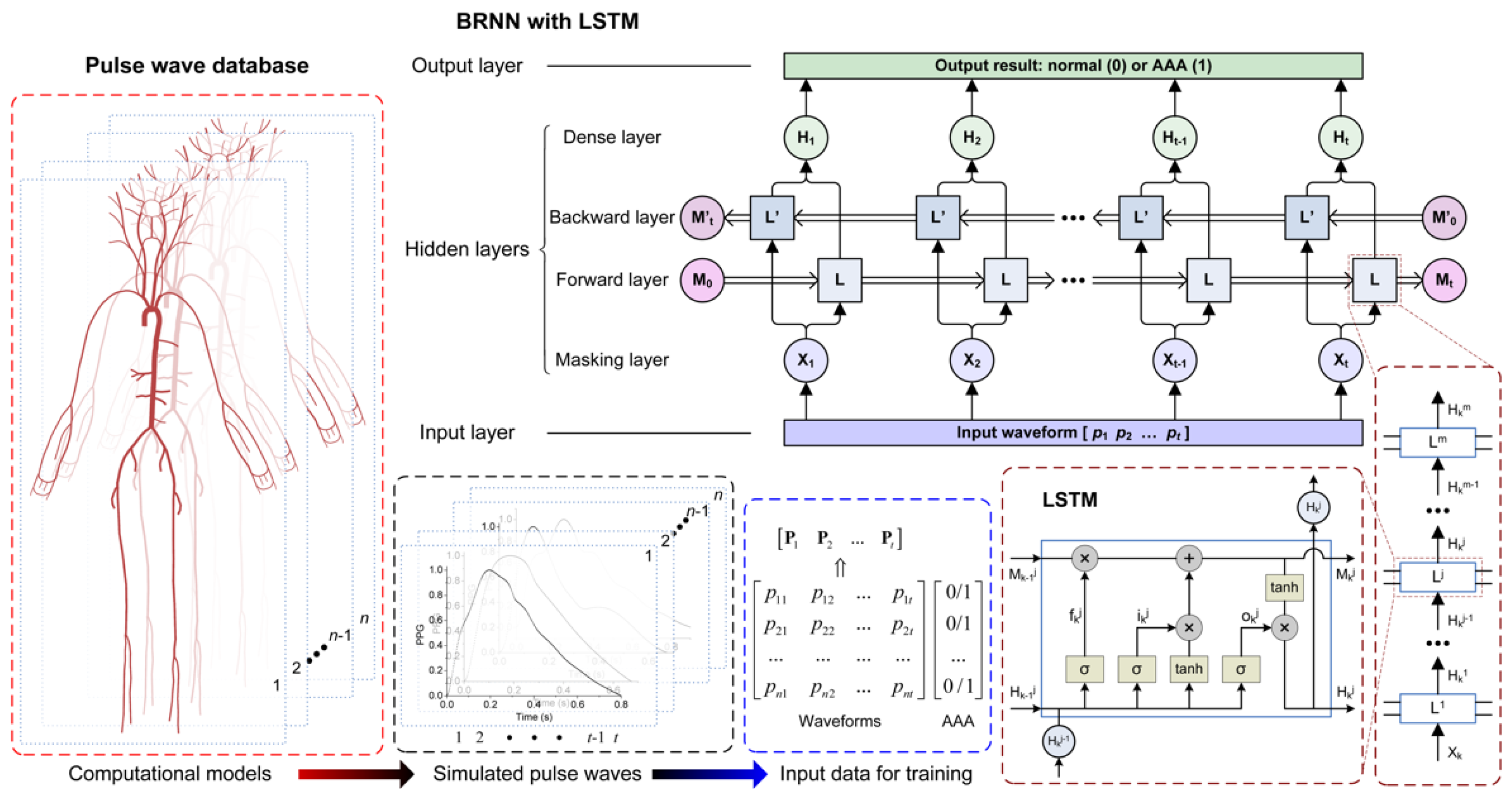 We designed a machine learning architecture based on a recurrent neural network (RNN) to detect AAAs using photoplethysmogram (PPG) signals (Symmetry, 2021). These signals can be measured by wearable devices, making them suitable for widespread use (Proc IEEE, 2022).
Our method was trained and tested using peripheral PPG signals from a database of in silico pulse waves representative of subjects aged 55, 65 and 75 years old, both with and without AAAs. (More details here.)
We designed a machine learning architecture based on a recurrent neural network (RNN) to detect AAAs using photoplethysmogram (PPG) signals (Symmetry, 2021). These signals can be measured by wearable devices, making them suitable for widespread use (Proc IEEE, 2022).
Our method was trained and tested using peripheral PPG signals from a database of in silico pulse waves representative of subjects aged 55, 65 and 75 years old, both with and without AAAs. (More details here.)
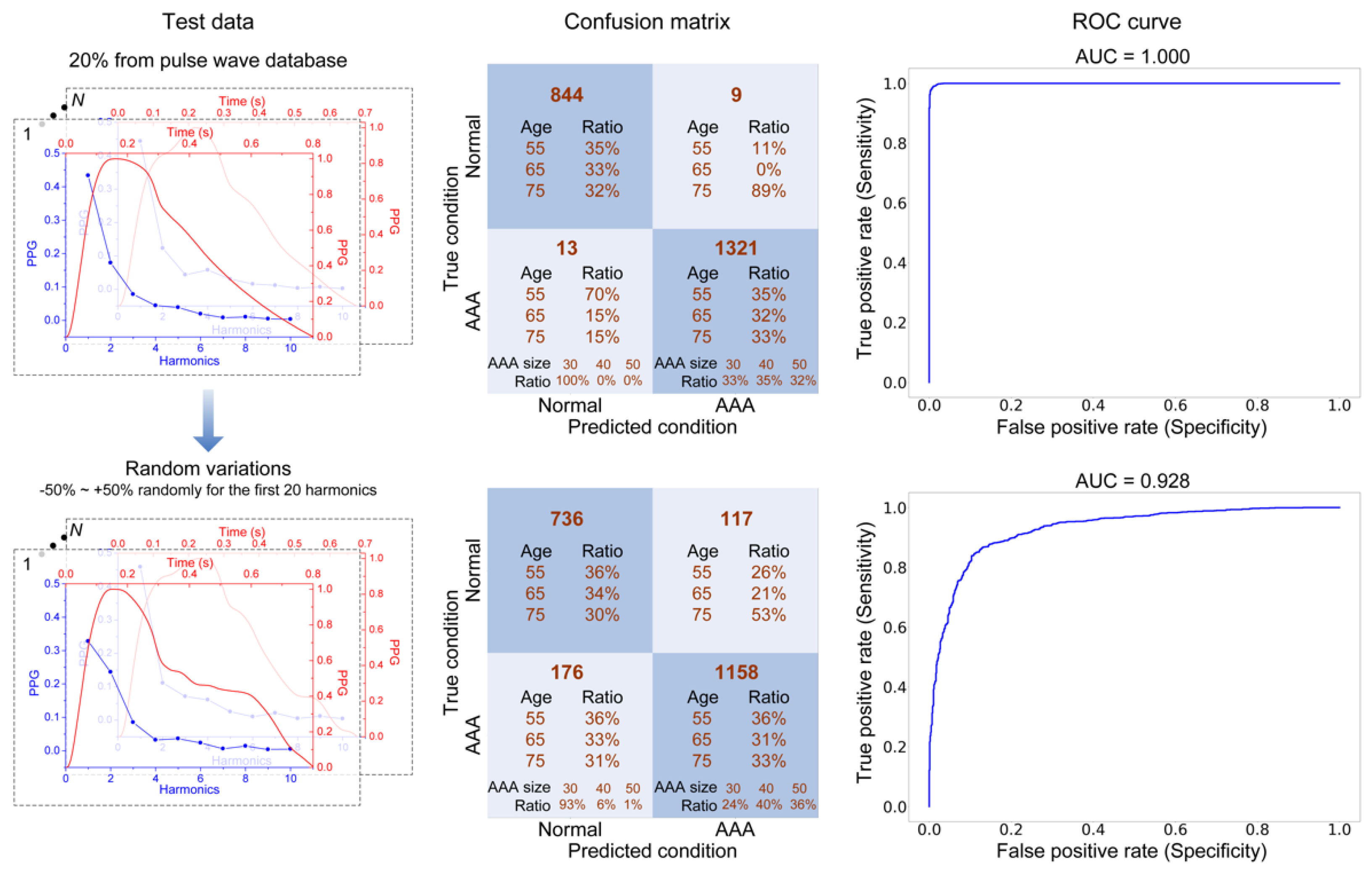
The model achieved a a sensitivity of 86.8% and a specificity of 86.3% in early AAA detection, even when random noise was added to the PPG signals. Notably, the number of false positives increased with age, while false negatives increased with decreasing aneurysm size. These findings suggest that machine learning-based pulse wave analysis is a promising approach for AAA screening using signals acquired from wearable devices (Symmetry, 2021).




We designed a machine learning architecture based on a recurrent neural network (RNN) to detect AAAs using photoplethysmogram (PPG) signals (Symmetry, 2021). These signals can be measured by wearable devices, making them suitable for widespread use (Proc IEEE, 2022).
Our method was trained and tested using peripheral PPG signals from a database of in silico pulse waves representative of subjects aged 55, 65 and 75 years old, both with and without AAAs. (More details here.)
The model achieved a a sensitivity of 86.8% and a specificity of 86.3% in early AAA detection, even when random noise was added to the PPG signals. Notably, the number of false positives increased with age, while false negatives increased with decreasing aneurysm size. These findings suggest that machine learning-based pulse wave analysis is a promising approach for AAA screening using signals acquired from wearable devices (Symmetry, 2021).
Funders